
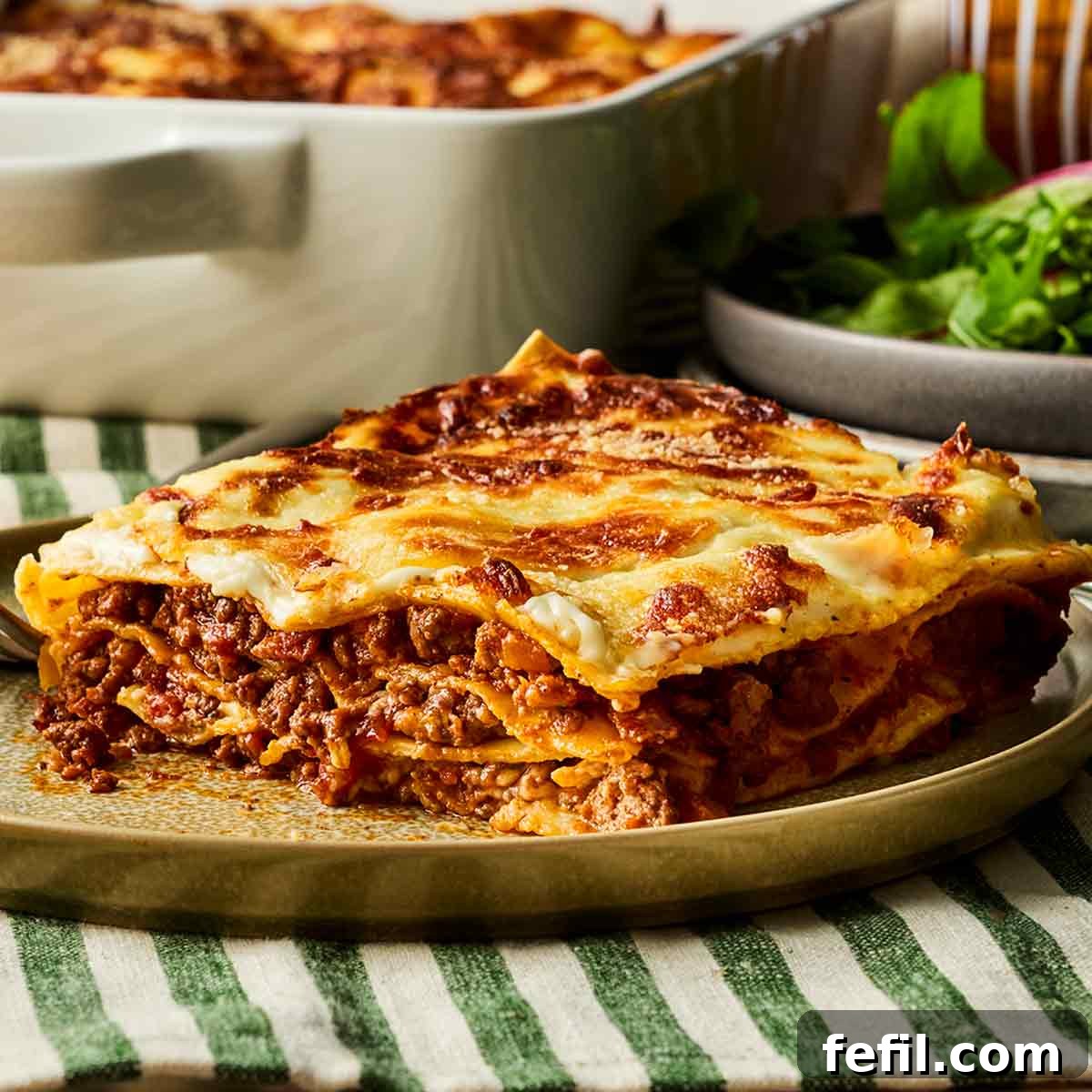
There’s something truly magical about serving a homemade Lasagne. This step-by-step recipe guides you through creating a simple yet utterly showstopping classic dish that promises perfection every time. Imagine tender pasta sheets embracing layers of rich, slow-simmered Bolognese ragu, all bathed in a luscious, creamy béchamel sauce, crowned with a crispy, golden, cheesy top. It’s a culinary masterpiece, a symphony of flavors and textures that is truly total heaven and undoubtedly worth every moment of effort.
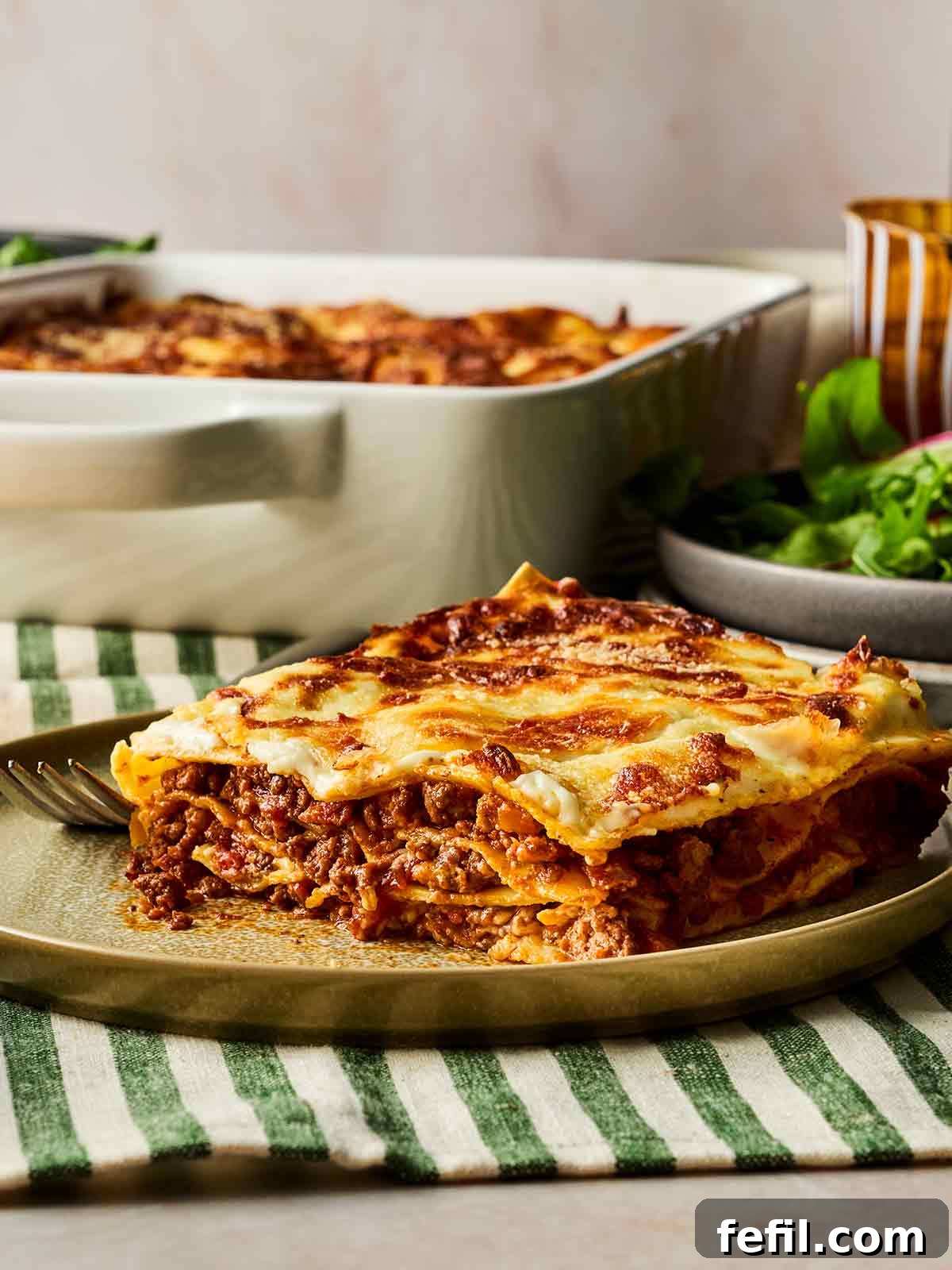
The moment I present a beautifully baked Beef Lasagne at the center of my dining table fills me with immense pride. It’s a feeling that comes from knowing the dedication, effort, and love poured into preparing a meal for my cherished family and friends. This isn’t just food; it’s an expression of care, a centerpiece that gathers everyone around, ready to indulge in pure comfort.
Often, a classic Lasagne (or Lasagna, as some spell it) seems to be unfairly underrated. Perhaps because it’s widely available in various forms, from pub menus to microwaveable options, its true potential as one of our most beloved comfort dishes sometimes goes unnoticed. However, while you might quickly assemble a decent version, I firmly believe that this particular recipe benefits from a little extra time and attention – and I promise, it remains incredibly easy to follow, even for beginners.
A few carefully selected ingredients, a bit more simmering time to deepen the flavors, and the creation of a silky-smooth béchamel sauce elevate this dish from good to extraordinary. The result is a magnificent culinary creation, elegant enough for entertaining guests at a special dinner, yet comforting and hearty enough for a casual family meal on any given evening. This is your ultimate, **foolproof step-by-step guide** to crafting the absolute best homemade Lasagne from scratch, ensuring a memorable dining experience. Enjoy every single bite!
Why This Is the Ultimate Lasagne Recipe
This recipe isn’t just another Lasagne; it’s a meticulously crafted culinary journey designed to deliver unparalleled taste and satisfaction. Here’s why this particular recipe stands out:
- ⭐️ Unrivaled Richness and Flavor: Our Lasagne boasts a deep, complex, and incredibly flavorful meaty ragu, slow-simmered to perfection. Each bite is a testament to the layers of savory goodness, offering ultimate comfort.
- ⭐️ Perfect for Batch Cooking and Meal Prep: This Lasagne is a dream come true for those who love to plan ahead. It’s ideal for preparing in large batches, making it a convenient option for busy weeknights or future gatherings. Freeze portions, and you’ll have delicious homemade meals ready whenever you need them.
- ⭐️ Elevate Your Dining Experience: Transform your meal into an authentic Italian-style feast by serving this Lasagne with a variety of complementary sides. Think fresh green salads, crusty garlic bread, or even some roasted vegetables to complete the experience.
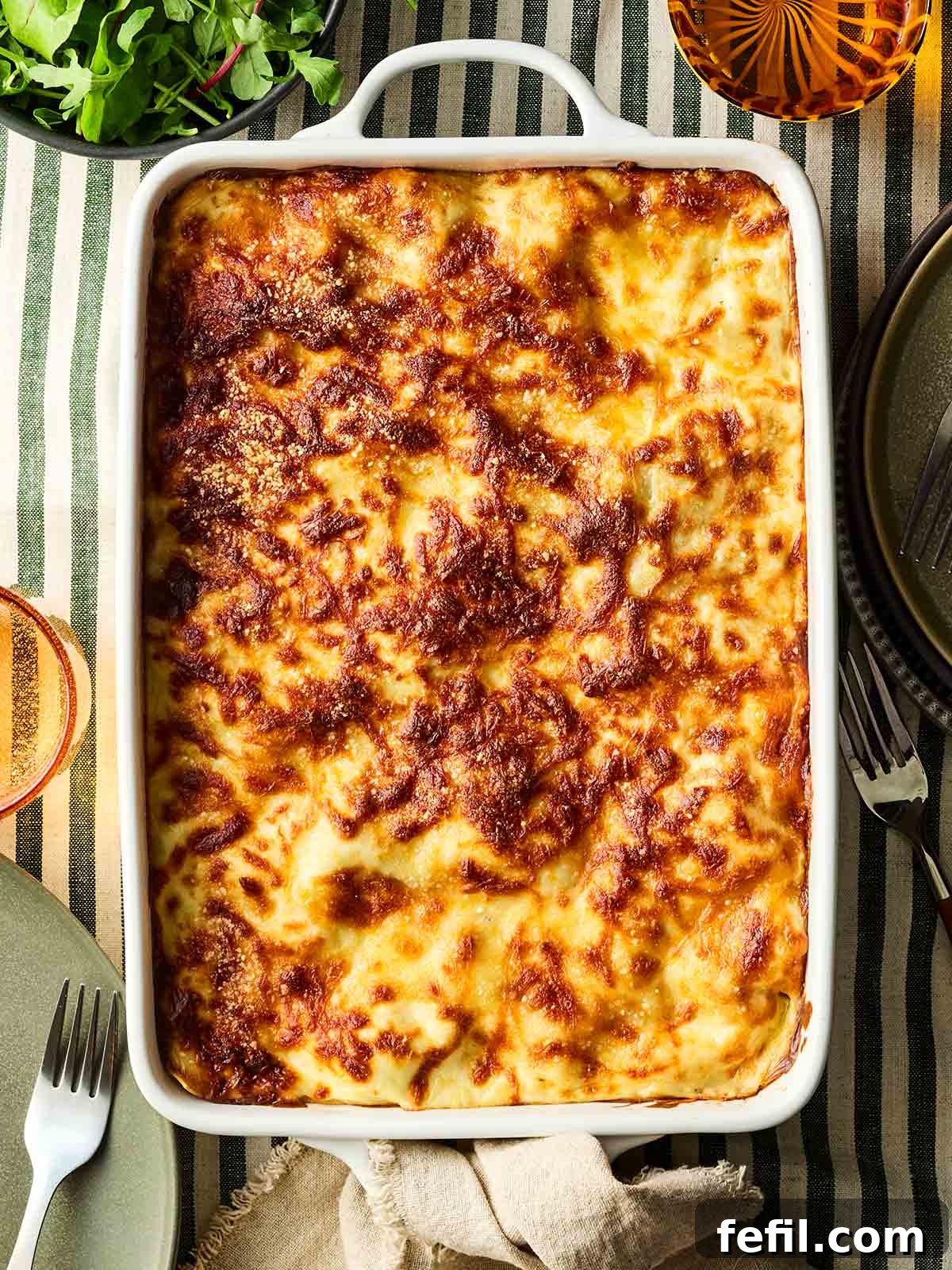
Chef’s Insights
This is the quintessential Lasagne recipe I rely on time and time again. While it requires a bit more effort than a quick one-pan meal, the depth of flavor and sheer deliciousness you achieve are simply unmatched. It’s truly a labor of love, but one that is incredibly rewarding and far from overwhelming. If you derive joy from cooking and relish preparing special dinners that leave a lasting impression, this recipe is absolutely for you. It guarantees to impress your family and guests, turning an ordinary meal into an extraordinary event.
Indeed, a quick lasagne can be delightful, but this recipe, despite its slightly longer preparation time, delivers an entirely different level of culinary excellence. It’s bursting with robust flavors and is undeniably worth every minute invested, resulting in a dish that will be remembered and requested for years to come.
Lasagne Ingredients: Crafting Culinary Perfection
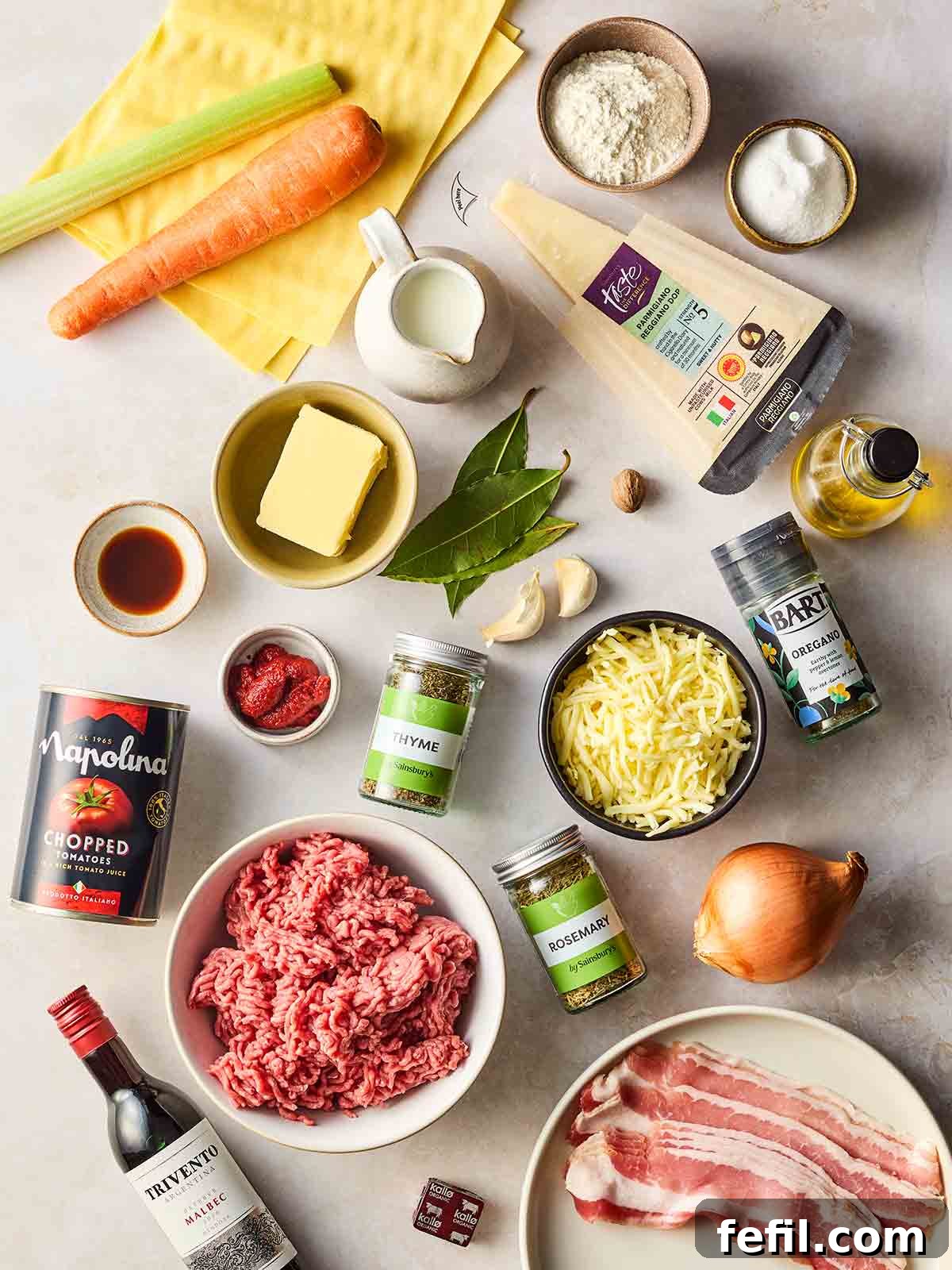
The secret to an exceptional Lasagne lies in the quality and harmony of its components. Here’s a detailed look at what you’ll need to create each layer of this magnificent dish:
For the Rich Ragu Sauce:
- Olive Oil: The base for sautéing. Extra virgin olive oil adds a lovely Mediterranean flavor, but sunflower oil works just as well.
- Pancetta: Thinly sliced pancetta is crucial for introducing a foundational layer of savory, slightly salty depth to the ragu. It renders beautifully, creating a flavorful fat to cook the vegetables.
- Beef Mince (Ground Beef): For the best results, opt for 5% or 10% fat content. This ensures a rich, meaty texture without making the sauce overly greasy. If using higher fat mince, you can drain excess fat after browning.
- Aromatic Base (Soffritto): A finely chopped blend of onion, carrot, and celery. This trio forms the traditional flavor backbone of many Italian sauces, adding sweetness and complexity. You can substitute fresh vegetables with a convenient frozen ‘soffritto’ mix to save prep time.
- Garlic: Four cloves, peeled and crushed, infuse the ragu with an essential pungent aroma. Fresh garlic is always preferred for its vibrant flavor, but frozen or jarred options are acceptable for convenience.
- Beef Stock: A high-quality beef stock cube or fresh stock is vital for enriching the sauce and adding savory umami notes, ensuring the ragu is deeply satisfying.
- Classic Herbs: A blend of dried rosemary, thyme, oregano, and bay leaves. These aromatic herbs are quintessential to Italian cuisine, imparting a warm, earthy, and fragrant character to the ragu.
- Red Wine: Approximately 150ml of any dry red wine. This ingredient is a game-changer, deglazing the pan and adding significant depth, acidity, and a subtle fruity complexity that elevates the entire sauce.
- Tomato Base: Good quality tinned chopped tomatoes and concentrated tomato puree. The quality of your tomatoes significantly impacts the final taste of the ragu, so choose the best you can find.
- Sugar: Just a teaspoon. This small addition is incredibly effective in balancing the acidity of the tomatoes, enhancing the natural sweetness of the sauce, and rounding out the flavors.
- Worcestershire Sauce: Two tablespoons. This secret ingredient adds an extra layer of savory depth and umami, contributing to a more complex and satisfying flavor profile.
- Seasoning: Generous amounts of sea salt and freshly ground black pepper are essential. Proper seasoning is key to bringing out all the wonderful flavors in the ragu.
For the Creamy Béchamel Sauce:
- Butter: Forms the base of the roux, providing richness.
- Plain Flour (All-Purpose Flour): Used to create the roux, which thickens the milk into a smooth, luxurious sauce.
- Whole Milk: The liquid base for the béchamel, contributing to its creamy texture and mild flavor.
- Grated Parmesan Cheese: Stirred into the béchamel for a salty, nutty, and cheesy dimension, enhancing its richness.
- Ground Nutmeg: A pinch of nutmeg is a traditional addition to béchamel, lending a warm, subtly spicy aroma that complements the cheese beautifully.
For Layering the Lasagne:
- Lasagne Sheets: Fresh pasta sheets are recommended for a wonderfully flat and even layer, ensuring a beautiful presentation and tender bite. However, dried lasagne sheets also work brilliantly, just ensure your ragu is adequately saucy to hydrate them.
- Grated Mozzarella: This is crucial! Use pre-grated mozzarella (the drier, low-moisture kind), not the fresh, watery mozzarella balls. The grated variety offers a lovely creamy texture and an incredible cheesy pull without making your Lasagne soggy.
- Grated Parmesan Cheese: A final sprinkling of this intensely flavorful, sharper cheese creates that irresistible golden-brown, crispy crust on top, bringing all the layers together with a perfect finish.
How to Make Lasagne from Scratch: A Detailed Guide
Creating a homemade Lasagne is a rewarding culinary adventure. Follow these detailed steps to build a dish that is bursting with flavor and perfectly layered:
Part 1: Preparing the Rich Ragu Sauce
- Brown the Pancetta and Mince: Heat 1 tablespoon of olive oil in a large, heavy-bottomed pan or Dutch oven over medium heat. Add the thinly sliced pancetta and fry for about 5 minutes until it begins to crisp and renders its fat. Then, add the beef mince, breaking it up with a spoon as it cooks. Continue to brown the mince for another 5-10 minutes until it’s evenly colored. Transfer the browned mince and pancetta to a bowl and set aside, leaving the rendered fat in the pan.
- Sauté the Aromatics: Add the remaining olive oil to the pan if needed. Introduce the finely chopped onions and crushed garlic. Sauté for approximately 5 minutes until the onions soften and become translucent, and the garlic is fragrant.
- Cook the Vegetables: Add the finely diced carrot and celery (or your frozen soffritto mix) to the pan. Cook for a further 5-10 minutes, stirring occasionally, until the vegetables begin to soften. If using frozen soffritto, cook until all the water has evaporated.
- Combine and Deglaze: Return the browned mince and pancetta to the pan with the cooked vegetables. Crumble in the beef stock cube, add the dried rosemary, thyme, oregano, sea salt, and bay leaves. Stir well to combine all the ingredients. Pour in the red wine, scraping the bottom of the pan with your spoon to release any flavorful browned bits (this is called deglazing and adds immense depth).
- Simmer the Sauce: Stir in the tinned chopped tomatoes, tomato puree, sugar, and Worcestershire sauce. Add a generous amount of freshly ground black pepper. Bring the sauce to a gentle simmer, then slightly crack a lid on the pan. Reduce the heat to medium-low and let it cook for a leisurely 1 to 1.5 hours. This slow simmering time is crucial for the flavors to meld and deepen, resulting in a thick, rich, and incredibly satisfying ragu. Once cooked, remove from heat and allow it to cool slightly.
Part 2: Crafting the Creamy Béchamel Sauce
- Make the Roux: In a separate saucepan, melt the butter over medium heat. Once melted, stir in the plain flour to form a smooth paste (this is your roux). Cook the roux for about 1 minute, stirring continuously, to cook out the raw flour taste.
- Add Milk and Whisk: Gradually add the whole milk, a little at a time, whisking constantly to prevent lumps. Continue whisking until all the milk is incorporated and the sauce is smooth.
- Thicken the Sauce: Bring the béchamel to a gentle simmer, then continue to whisk constantly for approximately 5 minutes. The sauce will progressively thicken and coat the back of a spoon.
- Finish the Béchamel: Remove the pan from the heat. Stir in the grated parmesan cheese and ground nutmeg. Season with salt and pepper to taste. Set the béchamel aside.
Part 3: Assembling the Lasagne
- Preheat Oven: Preheat your oven to 180°C (350°F) fan, 200°C (390°F) conventional, Gas Mark 6.
- First Layer – Ragu: Spread a thin, even layer of the rich ragu sauce across the base of your chosen baking dish (a roughly 20x30cm dish works well). This prevents the pasta from sticking and adds flavor to the bottom layer.
- Layer Pasta and Fillings: Place a layer of fresh lasagne sheets over the ragu, ensuring they cover the entire base. Then, evenly spread about one-third of the remaining ragu over the pasta. Follow this with a generous drizzle of about one-third of the béchamel sauce, and finally, sprinkle one-third of the grated mozzarella.
- Repeat Layers: Repeat the layering process: another layer of lasagne sheets, followed by ragu, béchamel, and mozzarella.
- Final Top Layer: For the very top layer, arrange the final lasagne sheets. Cover them with the remaining béchamel sauce, then sprinkle generously with the remaining grated mozzarella, and finish with a liberal dusting of grated parmesan cheese. This combination will create that irresistible golden, bubbly, crispy crust.
Part 4: Baking and Serving
- Bake to Perfection: Place the assembled Lasagne in the preheated oven. Bake for 30-40 minutes, or until the top is beautifully golden brown, bubbling enticingly, and the pasta is cooked through.
- Rest Before Serving: This is a crucial step! Once out of the oven, resist the urge to slice immediately. Allow the Lasagne to rest for at least 15 minutes before cutting and serving. This resting period allows the layers to set, making it much easier to slice neatly and ensuring that your beautiful layers hold their shape, preventing a messy collapse. Don’t worry, it will stay perfectly hot!
Leftovers & Storing Your Homemade Lasagne
One of the many joys of Lasagne is how well it keeps, making it an excellent choice for meal prep and enjoying later. Here’s how to store your delicious creation:
In the Fridge:
Any leftover Lasagne can be safely stored in an airtight container in the refrigerator for up to 3 days. To reheat, you can use a microwave until piping hot throughout, or gently warm it in the oven. If it appears a little dry, add a splash of water or a bit of stock before reheating to restore its moisture.
In the Freezer:
Like many beef mince (ground beef) recipes, Lasagne is a fantastic make-ahead and freezer-friendly dish! Preparing a few batches at once is a smart idea if you have the freezer space. To freeze, allow the cooked Lasagne to cool completely. Then, portion it into individual freezer-proof containers or wrap larger sections tightly in foil and then in freezer bags. It can be frozen for up to 3 months. Always ensure it is thoroughly defrosted in the refrigerator overnight before reheating. Reheat in the oven or microwave until completely hot throughout.
Expert Recipe Tips for Lasagne Success
To ensure your Lasagne is nothing short of spectacular, consider these additional tips and shortcuts:
Smart Shortcuts for Busy Cooks:
While this recipe is a labor of love, there are ways to slightly expedite the process without compromising flavor. Our Bolognese ragu, known for its rich taste, forms the heart of this Lasagne. To speed up preparation, you can use pre-diced pancetta and a 350g bag of frozen soffritto mix. This mix, often labeled as ‘vegetable base mix’ or similar in supermarkets, contains pre-chopped onions, carrots, and celery. If opting for frozen vegetables, remember to cook them a little longer than fresh. Ensure all the moisture evaporates and they begin to brown lightly to concentrate their flavors before proceeding with the rest of the ragu steps.
Choosing Your Lasagne Sheets:
For the best texture and presentation, fresh lasagne sheets are highly recommended as they lay flatter and cook more evenly, contributing to beautifully defined layers. However, dried lasagne sheets are a perfectly acceptable alternative and work brilliantly. If you choose to use dried sheets, it’s crucial to ensure your ragu is sufficiently saucy. Dried pasta absorbs more liquid during cooking. If your sauce appears to have “gaps” or is too dry when you stir it, add a little more beef stock to ensure there’s enough moisture for the dried pasta to absorb and soften properly, preventing a dry or tough Lasagne.
The Golden Rule: Rest Your Lasagne!
One of the most common mistakes, even seasoned cooks (myself included!) make with Lasagne, is cutting into it too soon after it comes out of the oven. This can lead to the beautiful layers collapsing and the sauce spilling out. The crucial tip for a perfect slice is patience! **Allow your Lasagne to rest for at least 15 minutes** after removing it from the oven, before attempting to cut and serve. This resting period allows the sauces to set and the layers to firm up, making serving much easier and ensuring each slice holds its elegant form. Don’t worry – despite resting, your Lasagne will still be wonderfully hot and ready to enjoy!
More Homemade Classic Recipes to Love…
Beef
Beef Wellington
Pork
Toad in the Hole (Foolproof Recipe!)
Family Dinner Ideas
Shepherd’s Pie
Desserts
Apple Crumble (Classic Easy Recipe)
Frequently Asked Questions (FAQs) About Lasagne
Absolutely, yes! This recipe is designed to be straightforward and accessible, even for those new to cooking. My best advice for beginners is to tackle it one step at a time. Focus on completing the ragu first; it can easily cool while you then concentrate on making the white sauce and meticulously layering your Lasagne. Once assembled, all that’s left is to pop it into the oven. You’ll be amazed at what you can create!
While this specific recipe features beef, you can certainly adapt it for a vegetarian diet. For a truly delicious and satisfying vegetarian option, I highly recommend following a dedicated Vegetarian Lasagne recipe. There are fantastic versions available that substitute the meat ragu with hearty vegetables and lentils, creating a equally comforting dish.
After assembling, your Lasagne will typically need to bake for about 30-40 minutes in a preheated oven, though exact times can vary depending on your oven’s calibration. You’ll know it’s ready when the top is beautifully golden brown, the sauces are bubbling around the edges, and it’s cooked through to perfection. A good indication is a slight resistance when gently poked with a knife, but the pasta should feel tender.
The history of Lasagne dates back centuries, and even within Italy, variations differ significantly from region to region. This recipe is my cherished take on a classic, embodying most of the beloved flavors that define what many consider a traditional Lasagne: a rich, tomatoey beef ragu, tender pasta sheets, and a creamy, cheesy topping. It incorporates essential flavor-building ingredients like aromatic vegetables, savory pancetta, and a hint of red wine to create a deeply satisfying and universally adored dish.
I would love to hear about your experience making this Lasagne! Please share your thoughts and rate the recipe using the stars below.
Also, I would LOVE to see your cooking creations! If you’d like to share yours with me, you can tag me on Instagram (@tamingtwins).
Classic Homemade Lasagne Recipe

Homemade is always best when it comes to this classic Lasagne recipe. It’s rich, delicious and so comforting – the ultimate treat for your loved ones.
By Sarah Rossi
Prep Time: 45 minutes
Cook Time: 30 minutes
Ragu Cooking Time: 1 hour 30 minutes
Total Time: 3 hours
Servings: 6
Ingredients
For the meat sauce:
- 2 tbsp Olive oil
- 100 g (4 oz) Pancetta, thinly sliced
- 500 g (1.1 lb) Beef mince, 5% fat
- 1 Onion, finely chopped (see notes)
- 4 Garlic cloves, peeled and crushed
- 1 Large carrot, finely diced
- 1 Celery stick, finely diced
- 1 Beef stock cube
- 1/2 tsp Dried rosemary
- 1/2 tsp Dried thyme
- 1/2 tsp Dried oregano
- 1/2 tsp Sea salt
- 3 Bay leaves
- 150 ml (0.75 cup) Red wine
- 400 g (14 oz) Tinned chopped tomatoes, plus 1/2 tin of water
- 2 tbsp Tomato puree
- 1 tsp Sugar
- 2 tbsp Worcestershire sauce
- Freshly ground black pepper
For the white (béchamel) sauce:
- 50 g (2 oz) Butter
- 50 g (2 oz) Plain flour
- 600 ml (2.5 cups) Whole milk
- 60 g (2 oz) Grated parmesan
- 1/2 tsp Ground nutmeg
For the lasagne:
- 300 g (10 oz) Fresh lasagne sheets (10-12 sheets, see notes)
- 200 g (7 oz) Grated mozzarella
- 60 g (2 oz) Grated parmesan
Instructions
Make the ragu:
- Heat 1 tbsp of oil in a large pan. Very thinly slice the pancetta. Add it to the pan and fry over a medium heat for 5 minutes until it’s starting to color and brown.
- Add the mince and cook for a further 5-10 minutes, breaking it up as it cooks, until it’s browned all over.
- Remove the mince and pancetta into a bowl and set aside.
- Put the remaining oil in the pan and add onions and garlic. Cook for 5 mins until they’re starting to soften.
- Add the remaining veg and cook for a further 5-10 minutes until it’s starting to soften.
- Add the mince and pancetta back to the pan. Add the stock cube, dried herbs, salt, bay leaves and stir well. Add the wine, tinned tomatoes, tomato puree, sugar, Worcestershire sauce and plenty of pepper.
- Bring to a simmer, pop a lid slightly ajar on the pan and cook for 1hr-1.5 hours over a medium-low heat until thick and rich. Leave to cool a little.
Make the white sauce:
- Melt the butter in a pan over a medium heat then stir in the plain flour. Cook this for a minute, stirring the whole time.
- Add in the milk, little by little, and whisk to make a nice smooth sauce. When you have added all the milk, whisk constantly for around 5 minutes until the sauce has thickened and coats the back of a spoon.
- Stir in the parmesan and nutmeg and some salt and pepper then set to one side.
Layer the lasagne:
- Heat the oven to 180℃/350F fan, 200℃/390F, Gas Mark 6.
- Spread a thin layer of the ragu in the base of your baking dish (roughly 20x30cm), then cover with lasagne sheets. Top with 1/3 of the remaining ragu, a 1/3 of the béchamel, then 1/3 of the grated mozzarella.
- Repeat these layers again – lasagne sheets, ragu, béchamel, mozzarella.
- For the last layer do ragu, lasagne sheets, béchamel, then mozzarella, then sprinkle the parmesan over the top.
Cook:
- Cook in the oven for 30-40 minutes until the top is golden and bubbling, then remove from the oven and leave to sit for 15 minutes before slicing. This will make slicing the lasagne so much easier and it will stay very hot!
Did you make this recipe? Click here to let us know how it went and give it a rating! Your feedback helps us to make more recipes you really want.
Notes
Base vegetables and pancetta: You could speed the prep up a little by using pre-diced pancetta and 350g frozen soffritto mix. This might be called ‘vegetable base mix’ or something similar in some supermarkets. If you are using frozen, make sure you give a little more time to browning it and cook until all the water has evaporated.
Grated mozzarella: This is not the same as mozzarella balls, which are much more liquidy! This type has a lovely creamy flavor and cheesy pull, but is a bit drier so won’t make the dish go soggy.
Lasagne sheets: If you would prefer to use dried lasagne sheets, make sure that the ragu is saucy enough. If your sauce has gaps in the pan when you stir it, it may need a little more stock to soak into the dried pasta.
Leave to stand: Leave the Lasagne to sit for 15 minutes after it comes out of the oven, before slicing. It will make serving it so much easier. It will also keep its nice layers instead of melting everywhere, and don’t worry – it will still stay very hot!
Nutrition (per serving, approximation)
Calories: 774kcal | Carbohydrates: 53g | Protein: 45g | Fat: 40g | Saturated Fat: 19g | Polyunsaturated Fat: 3g | Monounsaturated Fat: 14g | Trans Fat: 1g | Cholesterol: 173mg | Sodium: 1357mg | Potassium: 1010mg | Fiber: 2g | Sugar: 11g | Vitamin A: 2690IU | Vitamin C: 10mg | Calcium: 540mg | Iron: 6mg
Nutrition information is automatically calculated, so should only be used as an approximation. Nutritional values are per portion unless otherwise stated.
Additional Info
Course: Main Course
Cuisine: Italian