
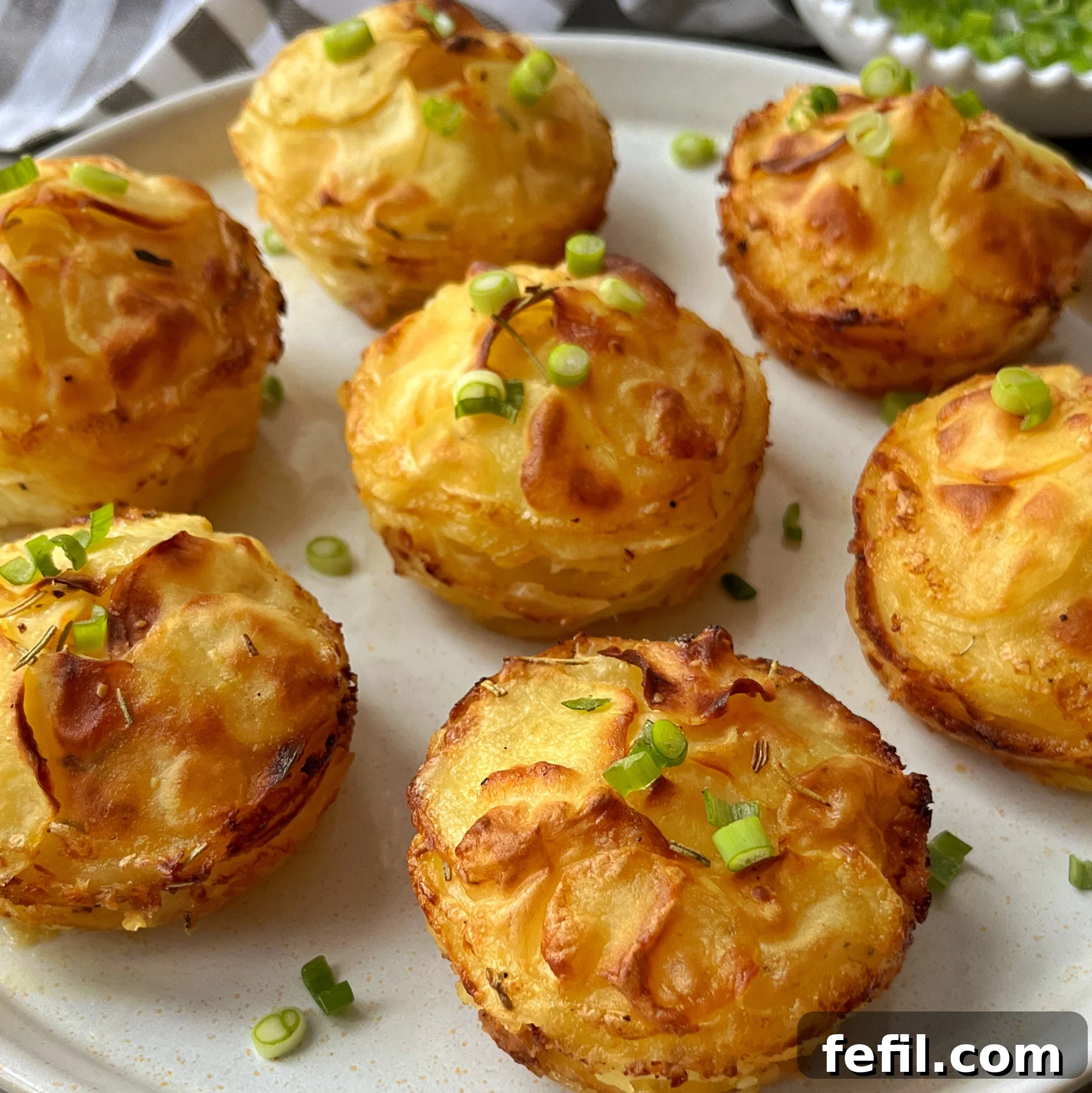
These Individual Dauphinoise Potatoes are an absolute culinary delight – a true showstopper that manages to be both surprisingly easy to make and exquisitely elegant. Transforming the rustic charm of traditional Gratin Dauphinois into refined, single-serving portions, this recipe offers a comforting and sophisticated side dish that is guaranteed to impress your guests and elevate any meal from ordinary to extraordinary. Each mini potato stack, baked to golden perfection in a muffin tin, features a wonderfully crispy exterior that gives way to a tender, creamy interior, all infused with aromatic garlic, fresh thyme, and a subtle, balancing hint of Dijon mustard.
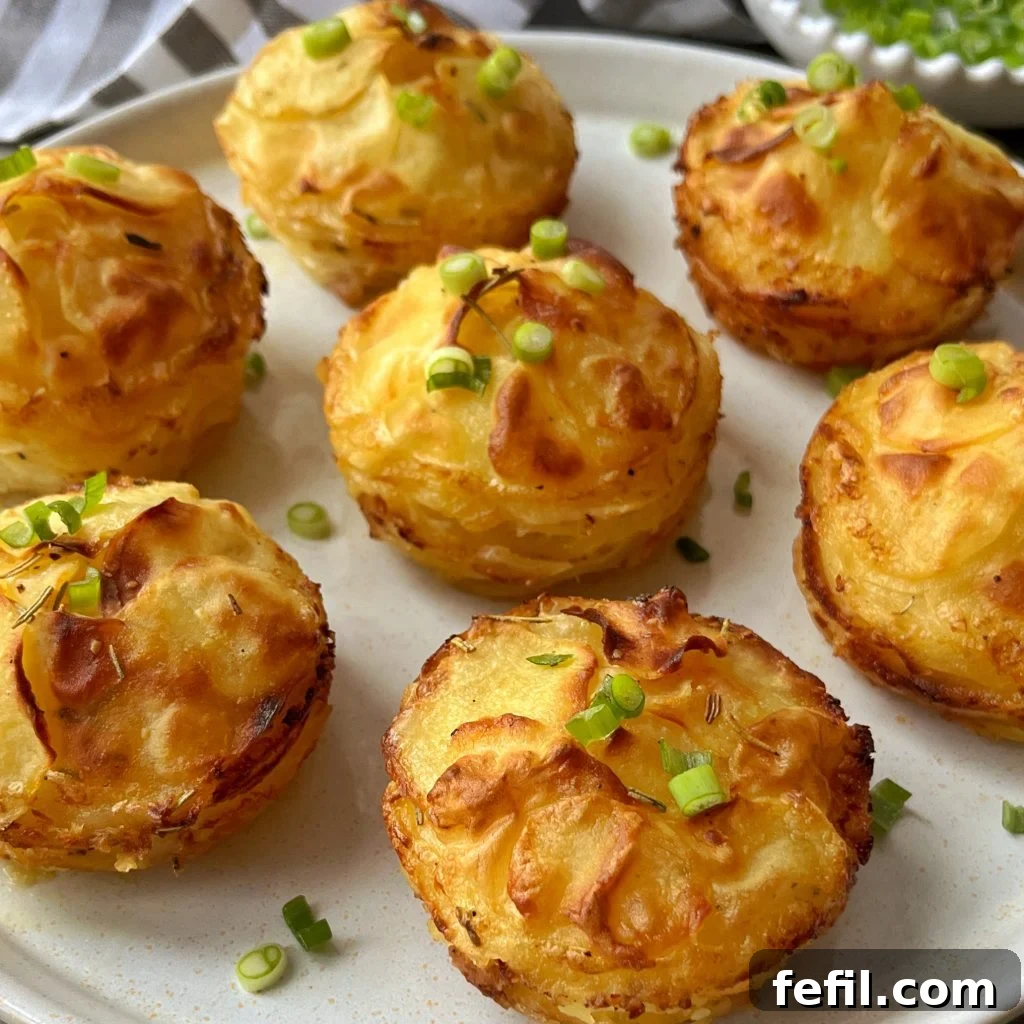
Crafting these delectable potato stacks in a muffin tin is a brilliant technique that not only simplifies plating but also adds a distinctive gourmet flair to your table. Every forkful delivers a harmonious blend of rich butter, luscious heavy cream, pungent minced garlic, fragrant dried thyme, and the delicate tang from Dijon mustard. While the original recipe inspires an exquisite rosebud shape, a simpler flat stack is equally delicious and easier to achieve for beginners. For an added layer of indulgence and a truly irresistible finish, consider topping these beauties with a generous sprinkle of your favorite grated cheese—sharp cheddar, nutty Gruyere, or savory Parmesan would all melt into a delightful, golden crust.
Whether you are planning a lavish holiday feast, hosting a sophisticated dinner party, or simply seeking to make a regular weeknight meal feel more special, these Individual Dauphinoise Potatoes are the quintessential choice. Their impressive presentation and complex flavor profile effortlessly mask their straightforward preparation, allowing you to focus on other culinary endeavors or simply enjoy the company of your loved ones without compromising on taste or visual appeal. This recipe proves that elegance doesn’t always demand excessive effort.
Why Individual Dauphinoise Potatoes are a Must-Try
Dauphinoise potatoes, known in France as Gratin Dauphinois, are a revered culinary classic originating from the historical Dauphiné region. This traditional French dish typically features thinly sliced potatoes baked slowly in cream, often enhanced with garlic and sometimes cheese, culminating in a rich, deeply comforting gratin. By transforming this beloved family favorite into individual portions, we elevate its status from a rustic comfort food to an elegant side dish that promises to be a standout on any dining table.
- Unmatched Presentation: The individual stacks are visually captivating, often resembling delicate potato roses or perfectly formed miniature gratins. This makes them an ideal choice for formal dinners, holiday gatherings, or any occasion where you wish to impress with thoughtful presentation.
- Effortless Portion Control: Say goodbye to the challenges of scooping a messy gratin! Each guest receives a perfectly sized and beautifully shaped serving, ensuring uniformity and ease of distribution.
- Superior Crispy Edges: Baking in a muffin tin significantly increases the surface area exposed to the oven’s heat. This results in more of those coveted golden-brown, crispy edges that are so irresistible, contrasting beautifully with the creamy interior.
- Serving Convenience: Individual portions are not only easier to serve but also fantastic for make-ahead planning. They can be prepared in advance and simply reheated, making entertaining a breeze.
- Flavor Concentration: The confined space of the muffin tin helps to concentrate the flavors of the cream, garlic, and herbs, ensuring every bite is packed with rich, savory goodness.
Essential Ingredients for Perfect Potato Stacks
The secret to achieving the sublime flavor and meltingly tender texture of these dauphinoise potatoes lies in selecting quality ingredients. Each component plays a pivotal role in creating a balanced, flavorful, and utterly delicious dish.
- Potatoes: You’ll need approximately 1 kilogram (about 2.2 pounds) of medium-sized potatoes. Waxy varieties such as Yukon Gold, Red Bliss, or new potatoes are highly recommended. These types hold their shape exceptionally well when thinly sliced and cooked, preventing them from becoming mushy. While starchy potatoes like Russets can be used, they require more careful handling to maintain their structure.
- Unsalted Butter: 40 grams (approximately 3 tablespoons). Unsalted butter is preferred as it allows you to control the overall saltiness of the dish. It contributes a rich, indulgent flavor and is crucial for creating that delightful golden-brown, slightly crispy base for each potato stack.
- Heavy Cream: 200 ml (approx. 6.5 fluid ounces or just under 1 cup). Full-fat heavy cream is absolutely essential for achieving the signature luxurious, decadent texture. Do not substitute with lighter creams or milk, as they are prone to curdling under heat and will not provide the same richness or consistency.
- Dijon Mustard: 1 teaspoon. This seemingly small addition makes a big difference. Dijon mustard introduces a subtle tang and a depth of flavor that expertly cuts through the richness of the cream and butter, preventing the dish from tasting overly heavy without overpowering the delicate potato flavor.
- Garlic: 2 cloves, finely minced. Freshly minced garlic is paramount for infusing the cream mixture with an irresistible, aromatic warmth. Garlic powder can be a poor substitute, lacking the vibrant, fresh notes.
- Dried Thyme: 1 teaspoon (or 1 tablespoon of fresh thyme, finely chopped). Thyme imparts an earthy, herbaceous aroma and flavor that perfectly complements potatoes and cream, adding a classic touch to this French-inspired dish.
- Sea Salt & Freshly Ground Black Pepper: To taste. Generous and balanced seasoning is the key to enhancing the natural flavors of the potatoes and cream. Taste as you go, especially with the cream mixture, to ensure perfect seasoning.
- Spring Onion (Green Onion): 1 spring onion, finely chopped, for garnish. This adds a beautiful pop of color and a fresh, mild oniony bite that brightens the rich potatoes upon serving.
Essential Equipment for Success
While the recipe itself is straightforward, having the correct tools can significantly enhance the preparation process, particularly when striving for that elegant, uniform presentation.
-
Muffin Tin
A standard 12-cup muffin tin is ideal for creating individual portions. For best results, ensure your muffin tin is non-stick, or prepare it thoroughly by greasing each cup generously with butter or a non-stick cooking spray to prevent the potatoes from adhering.
-
Mandolin Slicer
A mandolin slicer is highly recommended, if not essential, for achieving consistently thin and uniform potato slices. This consistency is crucial for both even cooking and for forming the beautiful rosebud or tightly packed stack shapes. If you do not own a mandolin, a very sharp chef’s knife and a steady hand can work, but dedicate time to slicing the potatoes as thinly and evenly as possible (aim for about 1/16 inch or 1.5 mm thick).
-
Large Mixing Bowl
You’ll need a spacious mixing bowl to combine the heavy cream with the seasonings and aromatics, ensuring everything is well incorporated before pouring over the potatoes.
-
Measuring Cups and Spoons
For accurate ingredient measurements, ensuring the perfect balance of flavors.
-
Whisk
To thoroughly combine the cream mixture.
-
Small Spoon or Ladle
For carefully spooning the cream mixture over each potato stack.
Step-by-Step Guide to Crafting Individual Dauphinoise Potatoes
Follow these detailed instructions carefully to create your perfect individual potato gratin stacks. Precision in slicing and layering will yield the most impressive results.

Individual Dauphinoise Potatoes Recipe
Print Recipe
Ingredients
- 1 kilogram potatoes, medium-sized, preferably waxy varieties like Yukon Gold or Red Bliss
- 40 grams unsalted butter, cut into 10 equal cubes
- 200 ml heavy cream, full-fat (approximately 6.5 fl oz or ¾ cup + 1 tbsp)
- 1 teaspoon Dijon mustard
- 2 cloves garlic, finely minced
- 1 teaspoon dried thyme, or 1 tablespoon fresh thyme, chopped
- Sea salt, to taste
- Freshly ground black pepper, to taste
- 1 spring onion, finely chopped, for garnish
Instructions
-
Prepare Your Oven and Muffin Tin: Preheat your oven to 180°C (355°F). For best results, place an empty muffin tin into the oven while it preheats. This slight warming helps the butter melt quickly and prevents the potato slices from sticking to the pan later.
-
Wash and Slice Potatoes: Wash and peel the potatoes thoroughly. Using a mandolin slicer is highly recommended for this step; carefully slice the potatoes into very thin, uniform rounds, aiming for approximately 1.5mm (1/16 inch) thick. The slices should be flexible enough to bend without breaking, which is key for successful layering. If you do not have a mandolin, use your sharpest chef’s knife and take your time to achieve the thinnest, most consistent slices possible.
-
Butter the Muffin Tin: Carefully remove the warm muffin tin from the oven using oven mitts. Place one cube of butter into the bottom of each muffin cup. The residual warmth of the tin will quickly melt the butter, ensuring it spreads evenly to coat the bottom of each cup.
-
Layer the Potatoes: Begin layering the potato slices into each buttered muffin cup. Start with slightly larger slices at the bottom to form a sturdy base. As you layer, sprinkle a small pinch of sea salt every five layers or so to season evenly throughout. Gently spread and press the slices to fill the cup, packing them somewhat tightly. You can stack them flat for a traditional look or begin to angle them slightly to form the base of the rosebud shape.
-
Form the Rosebud Shape (Optional): Once the potatoes are almost at the top of the muffin cup, switch to using smaller, more uniform slices. Arrange these smaller slices in an overlapping pattern around the edges of the stack, gently pushing them down along the sides. This careful arrangement creates that beautiful, closed rose shape, adding to the elegant presentation.
-
Complete the Stacks: Finish each stack with 5-6 overlapping pieces, leaving a small gap at the very top of each potato stack. This small allowance is crucial for the cream mixture to seep in and ensure all layers cook evenly and become tender.
-
Prepare the Cream Mixture: In a separate medium-sized bowl, whisk together the heavy cream, finely minced garlic, Dijon mustard, a generous pinch of sea salt, and freshly ground black pepper, along with the dried thyme. Mix until all ingredients are thoroughly combined and the mixture is smooth.
-
Pour the Cream: Carefully pour spoonfuls of the prepared cream mixture over the top of each potato stack. Pour slowly and steadily, allowing the rich cream to trickle down between all the potato layers. You may need to revisit each cup a few times, topping up until the cream is visible at the very top of each stack, ensuring full saturation for creamy results.
-
Bake to Perfection: Place the muffin tin back into the preheated oven. Bake for approximately 35 minutes, or until the individual potato stacks are beautifully golden brown on top, crispy at the edges, and the potatoes are fork-tender when pierced through the center.
-
Rest Before Serving: Once baked, remove the muffin tin from the oven and allow the dauphinoise potatoes to rest for 15-20 minutes. This crucial resting period allows the potatoes to firm up, ensuring they hold their delicate rosebud or stacked shape perfectly upon removal and serving.
-
Remove from Pan: To remove the potatoes from the pan, gently run a thin knife or an offset spatula around the edge of each potato stack to loosen it from the muffin cup. Then, carefully lift each one out with a spoon or a small spatula.
-
Garnish and Serve: Serve these exquisite individual dauphinoise potatoes immediately, garnished with fresh chopped spring onions or a light sprinkle of fresh thyme for an added burst of color and vibrant flavor.
Recipe Video: Individual Dauphinoise Potatoes
Make-Ahead and Storage Tips for Convenience
One of the significant advantages of preparing individual dauphinoise potatoes is their excellent flexibility for advance preparation. This makes them an invaluable asset for busy hosts or anyone looking to minimize stress on the day of a special event. You can prepare them fully or partially ahead of time, ensuring a seamless and enjoyable cooking experience.
Preparing in Advance:
- Up to 24 Hours Ahead (Unbaked): You can completely assemble the potato stacks in the muffin tin, cover the tin tightly with plastic wrap or aluminum foil, and refrigerate for up to 24 hours. When you are ready to bake, remove them from the refrigerator about 30 minutes prior to baking to allow them to come closer to room temperature. Then, bake as directed in the recipe, adding an extra 5-10 minutes to the baking time if they are still quite cold.
- Up to 2 Days Ahead (Baked): For maximum convenience, you can bake the potatoes fully until they are golden and tender. Allow them to cool completely in the muffin tin. Once cooled, cover the tin tightly with foil or carefully transfer the individual potato stacks to an airtight container. They can be safely stored in the refrigerator for up to 2 days.
Reheating Instructions:
- From Refrigerator (Baked): To reheat the pre-baked potatoes, arrange them back in the muffin tin (or on a baking sheet) and warm them in an oven preheated to 100°C (212°F) for approximately 20 minutes, or until they are heated through to the center and the edges crisp up again. For an extra crispy finish, you can increase the oven temperature to 180°C (350°F) for the last 5-10 minutes.
- From Frozen (Baked): If you have frozen your baked dauphinoise potatoes, it’s best to thaw them overnight in the refrigerator before reheating. Once thawed, follow the reheating instructions for refrigerated potatoes. Alternatively, you can reheat from frozen in an oven preheated to 150°C (300°F) for 30-40 minutes, ensuring they are thoroughly heated through.
Freezing:
Baked individual dauphinoise potatoes freeze surprisingly well, making them perfect for future quick meals or impromptu gatherings. Once baked and completely cooled, arrange the potato stacks in a single layer on a baking sheet and freeze until they are solid. Then, transfer the frozen stacks to a freezer-safe bag or an airtight container, separating layers with parchment paper to prevent sticking. They can be stored in the freezer for up to 1 month. Always thaw them in the refrigerator before reheating for the best texture and safety.
Serving Suggestions and Creative Variations
These elegant potato stacks are incredibly versatile and serve as a perfect complement to a wide range of main courses. Their rich, creamy, and savory flavor profile makes them an ideal partner for everything from hearty roasted meats to lighter proteins.
Perfect Pairings:
- Roasted Meats: They are a classic and unbeatable accompaniment to traditional roasted chicken, tender turkey, succulent lamb, or a perfectly cooked beef tenderloin, making them a staple for holiday dinners and festive gatherings.
- Steak & Chops: Elevate your weeknight or special occasion meal by serving these dauphinoise potatoes alongside a beautifully seared steak, juicy pork chops, or flavorful lamb chops for a truly restaurant-quality experience right at home.
- Fish & Seafood: The creamy richness of the potatoes offers a wonderful contrast to lighter protein options like baked salmon, pan-seared cod, or even grilled shrimp.
- Vegetarian Mains: For a satisfying vegetarian feast, pair these potatoes with a hearty mushroom Wellington, a robust lentil loaf, or a medley of roasted root vegetables.
Creative Variations to Try:
- Cheesy Dauphinoise: As suggested earlier, adding a sprinkle of grated cheese (such as nutty Gruyere, sharp cheddar, or salty Parmesan) over the top of the potato stacks during the last 10-15 minutes of baking will create an incredibly delicious, golden-brown, and bubbly cheese crust.
- Herbaceous Boost: Experiment with different fresh herbs to customize the flavor. Fresh rosemary, fragrant sage, or a mix of Italian herbs can be used in addition to or as a substitute for thyme in the cream mixture.
- A Hint of Spice: For those who enjoy a little warmth, a tiny pinch of cayenne pepper or a small dash of hot sauce stirred into the cream mixture can add a subtle, intriguing kick without being overly spicy.
- Savory Bacon Addition: Crispy bacon bits, either folded into the cream mixture before pouring or sprinkled on top of the potato stacks before baking, would introduce a delightful smoky and savory element.
- Caramelized Onion Layers: For an extra layer of sweetness and depth, very thinly sliced and caramelized onions can be layered between potato slices, adding another dimension of flavor.
More Delicious Potato Sides to Love
If you’re an enthusiast of versatile and comforting potato dishes, be sure to explore these other fantastic recipes. They are guaranteed to become new family favorites and offer diverse ways to enjoy this beloved vegetable.
- Cheesy Smashed Potatoes
- Potato and Onion Bake
- Duchess Potatoes
- Potato Waffles
- Potato Roses
Nutrition Information (per serving)
Carbohydrates: 1g,
Protein: 1g,
Fat: 11g,
Saturated Fat: 7g,
Polyunsaturated Fat: 0.4g,
Monounsaturated Fat: 3g,
Trans Fat: 0.1g,
Cholesterol: 31mg,
Sodium: 37mg,
Potassium: 28mg,
Fiber: 0.1g,
Sugar: 1g,
Vitamin A: 412IU,
Vitamin C: 1mg,
Calcium: 18mg,
Iron: 0.2mg
Nutrition information is automatically calculated and should be used as an approximation. Actual values may vary based on specific ingredients, portion sizes, and preparation methods.
Did you try this recipe? We’d love to hear from you!Share your culinary creation and leave a comment below with your feedback and photos.